
About
The Cancer Genetics and Epigenetics group studies alterations that impact the development of colorectal cancer (CRC) and gastric cancer, as well as their corresponding tumour phenotypes.
Their studies have extensively investigated DNA hypomethylation of genes and repetitive elements in the very early steps of gastrointestinal carcinogenesis, identifying that aberrant genomic demethylation of the mucosa is a risk factor for gastric and colorectal cancer development. They have also found that hypomethylation of some specific repetitive DNA elements is associated with aberrant genome duplication, which is known to promote chromosomal instability and contribute to the development of gastrointestinal cancers.
The current research of the group aims to explore the molecular mechanisms underlying this association between hypomethylation of those repetitive DNA elements and aberrant genomic duplication, which could reveal fundamental factors in the early stages of tumorigenesis preceding malignant transformation.
The group is also studying epigenetic alterations associated with CRC immunogenicity. Their recent studies have revealed the association between the epigenetic silencing of genes encoding extracellular matrix remodelers and higher lymphocytic infiltration levels in non-hypermutant CRCs. Pharmacological inhibition of these extracellular matrix remodelers could increase tumour immunogenicity, resulting in more abundant lymphocytic infiltration and enhanced response to immune checkpoint inhibitor therapy. This research builds on the group's long-standing interest in DNA methylation alterations affecting extracellular matrix remodelers, which led to the discovery of frequent and coordinated hypermethylation of ADAMTS genes. Additionally, their research has identified methylation alterations in other genes that have a substantial impact on CRC phenotype, they developed microarray-based technologies to analyse genomic methylation and discovered highly specific and sensitive epigenetic biomarkers for biliary cancer detection.
In their research, the team employs an interdisciplinary approach that combines epigenomics, transcriptomics, and genomics, computational analysis, molecular biology, and cell biology. Over the past few years, the group has been actively developing novel, cost-efficient, and scalable in vitro immuno-oncology models for genetic and pharmacological studies aimed at enhancing tumour immunogenicity and improving the response of gastrointestinal cancers to the most recently developed immunotherapies.
Keywords: Epigenomics, gastrointestinal cancer, immuno-oncology, 3D in vitro models.
Group leader
- Sergio Alonso Utrilla, PhD

Sergio Alonso Utrilla, PhD
Dr Sergio Alonso's research centres on understanding how genetic and epigenetic alterations drive cancer development and how these molecular features can be leveraged for biomarker discovery and translational applications. His work has made substantial contributions to cancer epigenetics, particularly through the study of DNA methylation changes across multiple tumor types. He has identified clinically relevant epigenetic biomarkers, such as promoter hypermethylation events with diagnostic potential, and uncovered mechanisms linking global hypomethylation to genomic instability. His earlier studies also characterized noncoding RNAs, repetitive elements, and microRNA regulatory networks, while contributing to the development of genome-wide methylation profiling technologies. Together, this body of work establishes a strong foundation in epigenetic deregulation as a key driver of tumorigenesis and a source of clinically actionable biomarkers.
A complementary line of research explores how epigenetic alterations affect the tumour microenvironment, particularly extracellular matrix remodelling and its role in tumour progression and metastasis. Dr Alonso has demonstrated that coordinated methylation changes regulate genes involved in matrix organization and invasion, supporting the concept of early epigenetic field defects in cancer risk. In parallel, he has extensive expertise in computational biology, integrating multi-omic datasets to characterize oncogenic pathways, including KRAS-driven colorectal cancer. This integrative approach is combined with the development of experimental models, such as tumourspheres and multicellular spheroids, to validate candidate biomarkers and study tumour-stroma interactions. Collectively, his research bridges molecular profiling, computational analysis, and functional validation, with a strong emphasis on translational oncology.
Contact: salonsou(ELIMINAR)@igtp.cat
ORCID: 0000-0001-6497-892X
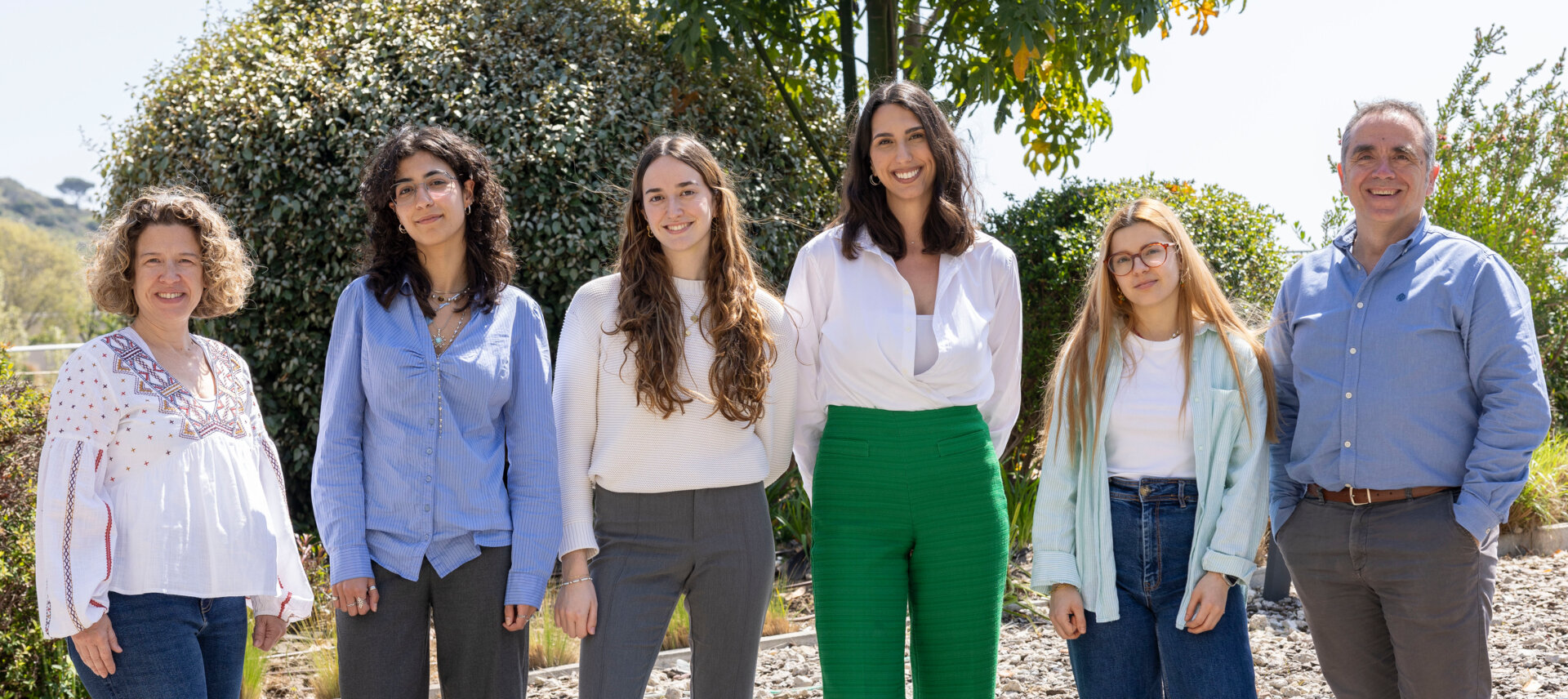
Team
Senior researcher, associate investigator
Beatriz González Alonso, PhD(ELIMINAR)
PhD student
Aida Font Cugat(ELIMINAR)
Master's students
Bárbara Tribizón Frisneda
Undergraduate student, technician
Claudia Lerma Canela(ELIMINAR)
Visiting scientist
Noah Bellesi(ELIMINAR)
Research lines
- Epigenetic dysregulation of pericentromeric and subtelomeric regions: association with telomere dysfunction and endoreduplication in the first steps of gastrointestinal carcinogenesis.
- Epigenetic determinants of enhanced tumour immunogenicity in colorectal cancer: towards targeted therapies to improve immunotherapy response.
- Development of cost-efficient and scalable 3D co-culture models for immuno-oncology studies.
Active projects
Role of genomic hypomethylation in spontaneous tetraploidization and chromosomal instability: novel mechanistic insights in the early steps of colorectal oncogenesis
PI: Sergio Alonso
Funding agency: Instituto de Salud Carlos III (ISCIII)
Agency code: PI21/01766
Duration: 1/1/2022 – 31/12/2025
Past projects
Remodeladores de la matriz extracelular: asociación con infiltración linfocítica y aplicabilidad como marcadores de respuesta a inmunoterapia en cáncer de colon y recto
PI: Sergio Alonso Utrilla
Funding agency: Fundación Mutua Madrileña
Agency code: AP174232020
Duration: 01/09/2020 - 31/08/2023
Extracellular matrix remodelers: association with lymphocytic infiltration and applicability as markers of response to immunotherapy in colon and rectal cancer
PI: Sergio Alonso
Funding agency: Fundación Mutua Madrileña
Duration: September 2020 - October 2024
Genomic Hypomethylation: Association between aging and cancer through a singular oncogenic pathway
PI: Sergio Alonso Utrilla (as co-PI)
Funding agency: Instituto de Salud Carlos III (ISCIII)
Agency code: PI18/01484
Duration: 01/01/2019 - 31/12/2022
Role of genomic hypomethylation in spontaneous tetraploidization and chromosomal instability: novel mechanistic insights in the early steps of colorectal oncogenesis
PI: Sergio Alonso Utrilla
Funding agency: Instituto de Salud Carlos III (ISCIII)
Agency code: PI21/01766
Duration: 01/01/2022 - 31/12/2024
Scientific publications
Highlighted publications
Balsa M, Alonso S, Sánchez L, Bugés C, Layos L, Calvo M, Garsot E, Viciano M, Clavell A, López R, Uchima H, Muñoz R, Muriel R, González B, Mirallas O, Murphy MB, Terán E, Montal R, Fleitas T, Hierro C. Targeting claudins in gastric cancer: A novel GLOWing strategy in the SPOTLIGHT. Cancer Treat Rev. 2026 May;146:103141. DOI: 10.1016/j.ctrv.2026.103141.
Garsot Savall E, Clavell A, Videla S, Natalia Pallarès, Hierro C, Bugés C, Alonso S, Viciano M. Impact of surgical approach on gastric cancer surgery based on textbook outcome: Open, laparoscopic, and robotic surgery-A retrospective cohort study. Surgery. 2026 Apr 18:110205. DOI: 10.1016/j.surg.2026.110205.
Navarro-Jiménez M, González B, Mulet N, Hierro C, Alonso S. KRAS-targeted therapies in colorectal cancer: a systematic analysis of mutations, inhibitors, and clinical trials. NPJ Precis Oncol. 2025 Nov 26;9(1):380. DOI: 10.1038/s41698-025-01166-3.
Mateos-Sánchez C, González B, de Miguel-García G, Font-Cugat A, Marcote-Corral I, Alonso S. Comparative analysis of 3D-culture techniques for multicellular colorectal tumour spheroids and development of a novel SW48 3D-model. Sci Rep. 2025 Jul 29;15(1):27687. DOI: 10.1038/s41598-025-13588-x.
Loi E, Zavattari C, Tommasi A, Moi L, Canale M, Po A, Sabato C, Vega-Benedetti AF, Ziranu P, Puzzoni M, Lai E, Faloppi L, Rullán M, Carrascosa J, Amat I, Urman JM, Arechederra M, Berasain C, Ferretti E, Casadei-Gardini A, Avila MA, Alonso S, Scartozzi M, Zavattari P. HOXD8 hypermethylation as a fully sensitive and specific biomarker for biliary tract cancer detectable in tissue and bile samples. Br J Cancer. 2022 Jun;126(12):1783-1794. DOI: 10.1038/s41416-022-01738-1.
González B, Navarro-Jiménez M, Alonso-De Gennaro MJ, Jansen SM, Granada I, Perucho M, Alonso S. Somatic Hypomethylation of Pericentromeric SST1 Repeats and Tetraploidization in Human Colorectal Cancer Cells. Cancers (Basel). 2021 Oct 26;13(21):5353. DOI: 10.3390/cancers13215353.
Vymetalkova V, Vodicka P, Vodenkova S, Alonso S, Schneider-Stock R. DNA methylation and chromatin modifiers in colorectal cancer. Mol Aspects Med. 2019 Oct;69:73-92. DOI: 10.1016/j.mam.2019.04.002.
Additional information
Collaborative networks
IMMUNO-model: Modelling immunotherapy response and toxicity in cancer
The COST Action IMMUNO-model CA21135 aims to foster research and innovation in the field of preclinical immuno-oncology models with the ultimate goal of advancing in the treatment of cancer patients by improving their outcomes and quality of life.

Doctoral theses
Title: DNA methylation alterations associated with genome endoreduplication and with tumor-infiltrating lymphocytes in colorectal cancer
Author: Maria Navarro Jiménez
Supervisors: Sergio Alonso Utrilla and Beatriz González Alonso
University: Universitat Autònoma de Barcelona (UAB)
Date of defense: 15 December, 2023
Master’s theses
Title: Characterization of three-dimensional co-cultures of colorectal cancer cell lines
Author: Gisela de Miguel Garcia
Supervisors: Sergio Alonso Utrilla and Beatriz González Alonso
University: Universitat Autònoma de Barcelona
Date of defense: 6 September 2023
Title: Molecular characterization of gastric cancers: genetic mutations, global DNA methylation and presence of cancer-related pathogens
Author: Marta Pérez López
Supervisors: Sergio Alonso Utrilla and Beatriz González Alonso
University: Universitat Pompeu Fabra (UPF)
Date of defense: 25 June 2023
Title: Epigenetic alterations in the JAK3/STAT3 pathway in colorectal cancer
Author: Catarina Sofia Ferrera Violante
Supervisors: Sergio Alonso Utrilla and Federico Herrera
University: Universidade de Lisboa
Date of defense: July 2024
Title: Epigenetic alterations in AOX1, TBX20 and BMP3 associated with increased tumour immunogenicity in colorectal cancer
Author: Anna Pujol Cano
Supervisors: Sergio Alonso Utrilla and Beatriz González Alonso
University: Universitat Autònoma de Barcelona
Date of defense: July 2024
News
IGTP in 2025: 12 selected news stories
We look back at the year's most significant news stories, showcasing the dedication and collaboration that define IGTP.
The CARE Annual Meeting reviews the program’s cancer research activity and sets priorities for the months ahead
The III CARE Annual Meeting, held on 5 December at BCIN, brought together the cancer research community of the Can Ruti Campus for a day focused on scientific dialogue, interdisciplinarity and future strategy.
Contact
(+34) 93 554 3050 extn: 3063