IGTP in 2025: 12 selected news stories
We look back at the year's most significant news stories, showcasing the dedication and collaboration that define IGTP.
At the IGTP TODAY
We look back at the year's most significant news stories, showcasing the dedication and collaboration that define IGTP.
Specialists from the Digestive System Department at the Hospital Germans Trias and the Inflammatory Bowel Disease Research Group (GReMII) at IGTP have led and published a unique study that represents an improvement in the monitoring and treatment of patients who have undergone surgery due to one of the main inflammatory bowel diseases: Crohn's disease.
The UAB organised a conference dedicated to the challenges of university hospitals, bringing together over one hundred professionals from the research institutes of affiliated hospitals and the University itself. Josep Manyé and Marc Jante from IGTP had the opportunity to briefly present their innovative research projects.
Once again, the names of around thirty renowned professionals - from the Hospital and the Germans Trias i Pujol Research Institute (IGTP), the Fight Infections Foundation, IrsiCaixa, the Josep Carreras Leukaemia Research Institute (IJC), and the Institut Català d'Oncologia (ICO) - appear on a global list of scientists who have achieved the highest impact through their publications and citations.
Researchers at IGTP and IISPV have conducted a review on the therapeutic potential of extracellular vesicles in inflammatory bowel disease. While this approach remains in the early stages of research, ongoing clinical studies for various diseases already support its viability.
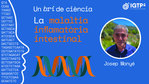
Today, World Inflammatory Bowel Disease (IBD) Day, IGTP premieres the sixth episode of its podcast 'Un bri de ciència'. Researcher Josep Manyé explains the work of his team to combat this group of diseases, and a patient shares her experiences with Crohn's disease.
A multidisciplinary group of researchers from the Germans Trias i Pujol Research Institute (IGTP), the Gastroenterology Service of the Germans Trias i Pujol Hospital and the CIBER-EHD, have used transcriptomics to combine data from public databases and from Crohn's disease patient and controls. They have identified the TMIGD1 gene as having an important role in the loss of the barrier between the cells lining the small intestine and its contents. The discovery throws new light on the mechanism of Crohn's disease and opens the way for more personalized therapies.
A study by the Digestive Inflammatory Pathology Research Group at the IGTP was awarded the best basic-translational research study in the Catalan Digestive Medicine Conference 2019. The study presented by Dr Violeta Lorén is within one of the main research lines of the group and centres on understanding, predicting and solving one of the main complications arising from therapy for patients with ulcerative colitis: the failure of glucocorticoid treatment.
Researchers from the Digestive Inflammatory Pathology Research Group at the IGTP and the Spanish Network for Hepatic and Digestive Diseases (CIBEREHD) have identified key elements of the mechanism behind the failure of steroid treatments for ulcerative colitis in some patients. Treatment failure is one of the main obstacles in the management of this disease and the new findings could help prevent treatment failure and allow for more efficient rescue therapies when needed. The study also identifies a possible biomarker to predict which patients might suffer treatment failure. The research was led by Dr. Eugeni Domènech and Dr. Josep Manyé, and published recently in the Journal of Crohn's and Colitis.
The construction company CBC already has its Christmas present for its staff and clients this year; the children's story "El Viaje de Crohn", a book written by Laura Marin a specialist nurse for this type of illness who works in the Digestive Inflammatory Pathology Research Group at the IGTP. All the proceeds will go towards the group's research effort.